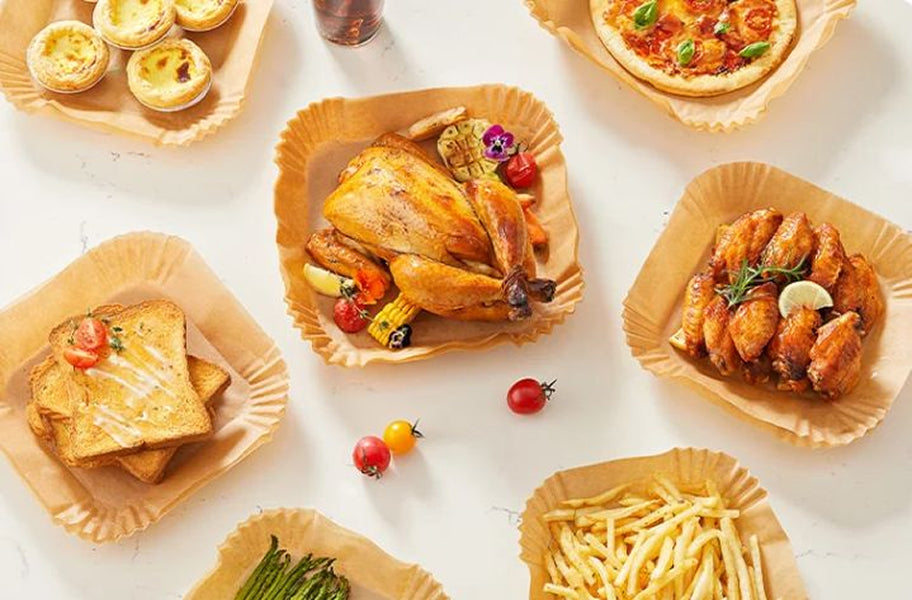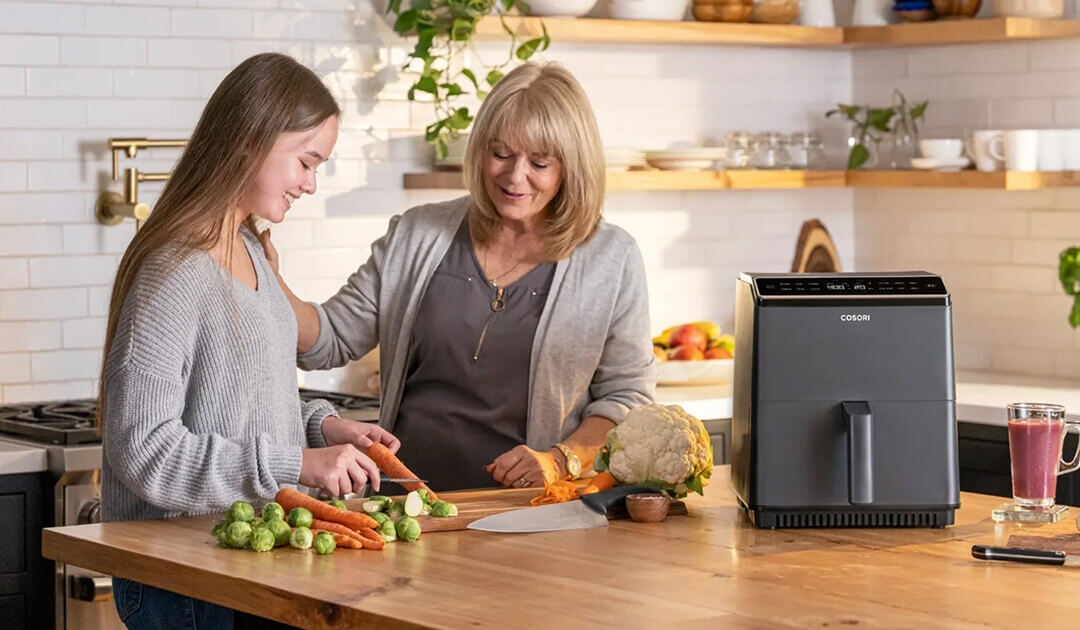

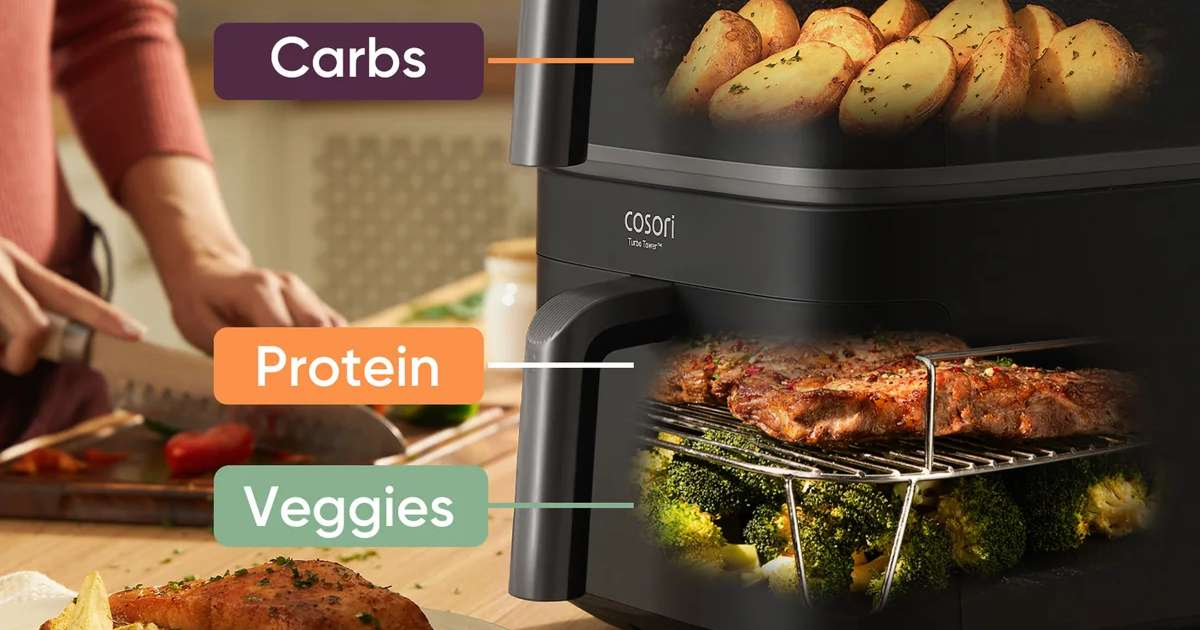
If you've ever pulled a batch of fries out of your air fryer and found one side golden and crisp while the other is pale and soft, you're not alone — and you're not necessarily doing anything wrong. Among owners of stacked dual-basket air fryers, nearly a third report uneven cooking as an ongoing issue, and for more than 4 in 10 people who replace their air fryer, disappointment with cooking results is the reason why.
Most guides will tell you it's your technique. Sometimes it is. But sometimes the problem is baked into the machine itself — literally, in how the heat gets to your food. Here's how to tell the difference, and what actually fixes it.
Start Here: The Fixes That Take Two Minutes
Before you blame the appliance, rule out the basics. These solve the majority of uneven cooking complaints:
- Give food room to breathe. Air fryers cook by circulating hot air, so a basket packed edge-to-edge blocks that airflow. Spread food in a single layer with small gaps between pieces.
- Preheat before you load the basket. Adding food to a cold chamber means the pieces closest to the heating element get a head start on everything else.
- Shake or flip halfway through. This redistributes food so every surface gets equal exposure to the airflow, not just the side facing the element.
- Cook similar sizes together. A basket with a mix of small and large pieces will always finish unevenly, because they need different cook times.
If you've already tried all of this — smaller batches, preheating, shaking the basket like clockwork — and one side of your air fryer is still consistently undercooked, the issue probably isn't you.
The Part Most Guides Don't Mention: It Might Be the Design
Here's what's often left out of the troubleshooting checklist: in many stacked dual-basket air fryers, both baskets share a single motor and a heating element positioned at the back of the unit. That means heat has to travel across the cooking chamber to reach the front, creating a temperature gradient from back to front — regardless of how carefully you load the basket or how often you shake it.
When two baskets are stacked and only one heating system is doing the work for both, one basket effectively becomes secondary. It's not that the machine is faulty — it's that it was never designed to heat two baskets independently in the first place.
The Two-Minute Test: Is It You, or Is It the Machine?
Run this simple test to find out:
- Cook the exact same food (same size, same quantity) in both baskets at the same time and temperature.
- Don't shake or rotate anything — just let it run.
- Compare the results side by side.
If one basket, or one zone within a basket, consistently comes out less done than the other — every single time, regardless of what you cook — that's a structural pattern, not a technique problem. No amount of shaking the basket will fix a heating element that isn't reaching that zone in the first place.
What Actually Solves a Structural Problem
If uneven cooking is coming from the heating architecture, the fix has to happen at the architecture level too. That means:
- Independent heating for each basket, rather than one shared element doing double duty
- A dedicated motor per basket, so airflow to one side isn't compromised by what's happening in the other
This is the logic behind Cosori Turbo Tower Compact's design: two separate 1,300W heating elements — one for each basket — running off two independent DC motors, for 2,630W of total output. Each basket heats and circulates air on its own, rather than splitting one system's output between two baskets.
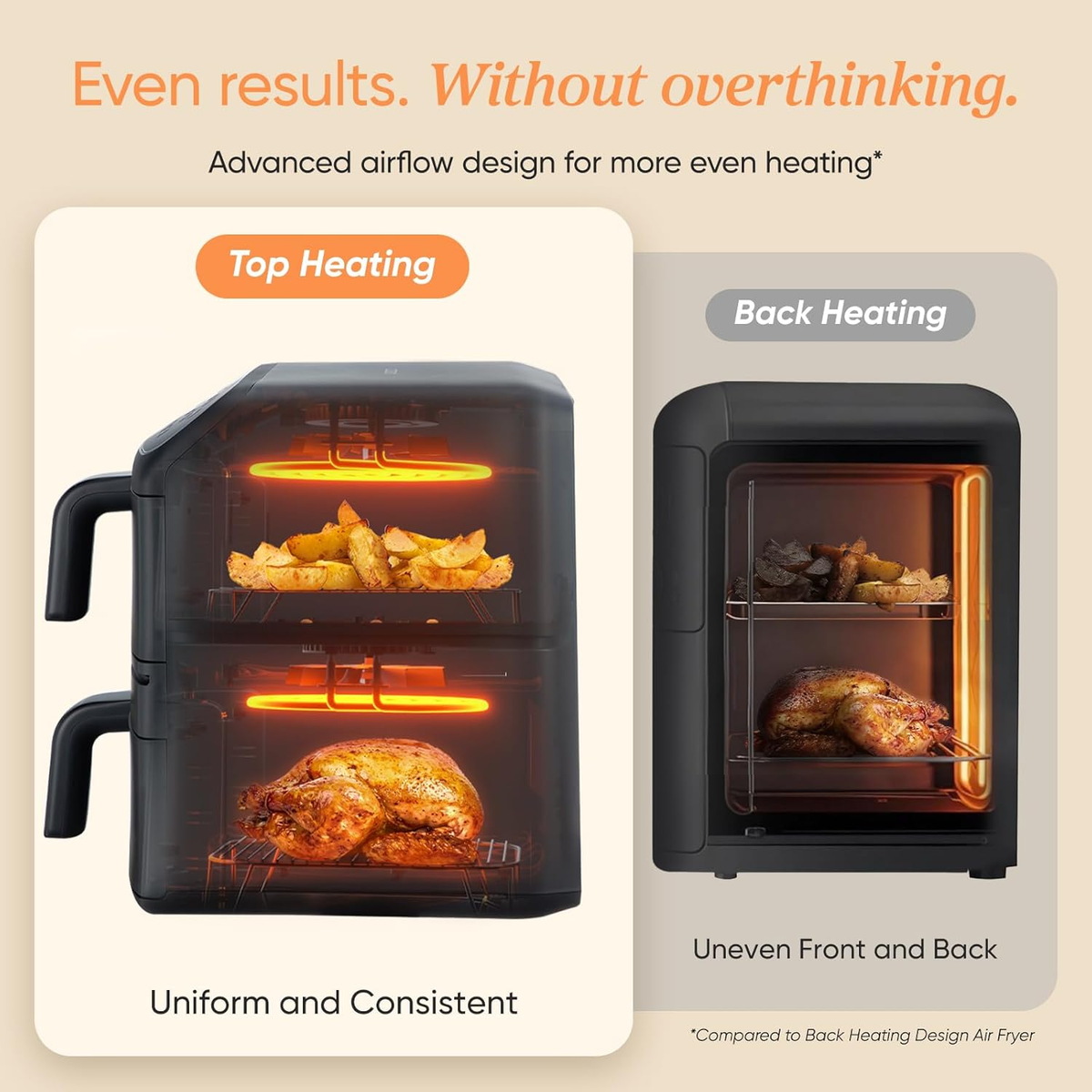
In testing on standard French fries, this independent top-heating layout cooked 30% faster than a rear-heating design sharing one element across two baskets. The dual DC motor setup also spins 33% faster than the single AC motor found in many rear-heating models — which translates to more consistent airflow reaching every corner of both baskets, not just the one closest to the heat source.
The Space Question, in Real Numbers
If you've been putting off a stacked design because you assumed it would eat up your counter, here's what the numbers actually look like:
- 27.5cm wide — narrower than the long edge of a sheet of A3 paper
- 8.6 litres total capacity, split across two 4.3-litre baskets — enough for 12 chicken wings or 2lb of frozen fries per basket, so you can cook two different foods (or two different amounts) at once
- A cooking footprint of roughly 42.6cm deep by 27.5cm wide — designed to sit comfortably on a standard UK worktop, where usable counter depth often runs between 60–100cm
The point of a stacked design is that you get two full-size cooking baskets in the footprint of one — you're not trading counter space for capacity, and you're not trading capacity for even cooking either, provided the heating system underneath is actually built to support two baskets independently.
FAQ
Why does my air fryer cook food unevenly on one side?
In most cases it's overcrowding, a cold start, or food sitting in one spot for the whole cook. But if it happens consistently in the same zone no matter what you do, it may be a shared heating element or motor not reaching that area equally.
Is uneven cooking a sign my air fryer is broken?
Not necessarily. It's more often a design limitation — particularly in stacked dual-basket models where one heating element and motor serve both baskets — rather than a fault or malfunction.
Do dual-basket air fryers cook less evenly than single-basket ones?
It depends on the design. Models where both baskets share one heating element and motor are more prone to uneven results between baskets. Models with independent heating and motors for each basket are built specifically to avoid this.
How do I know if it's my technique or the air fryer itself?
Run the same food in both baskets at the same time and temperature without shaking. If the unevenness shows up in the same place every time, it's the design. If it varies depending on how full the basket is or whether you shook it, it's technique.
If you've ruled out technique and you're still getting inconsistent results, it might be worth looking at how your air fryer's heating system is actually built. Cosori Turbo Tower Compact uses independent top heating and two dedicated motors — one for each basket — so both sides cook on equal terms.