
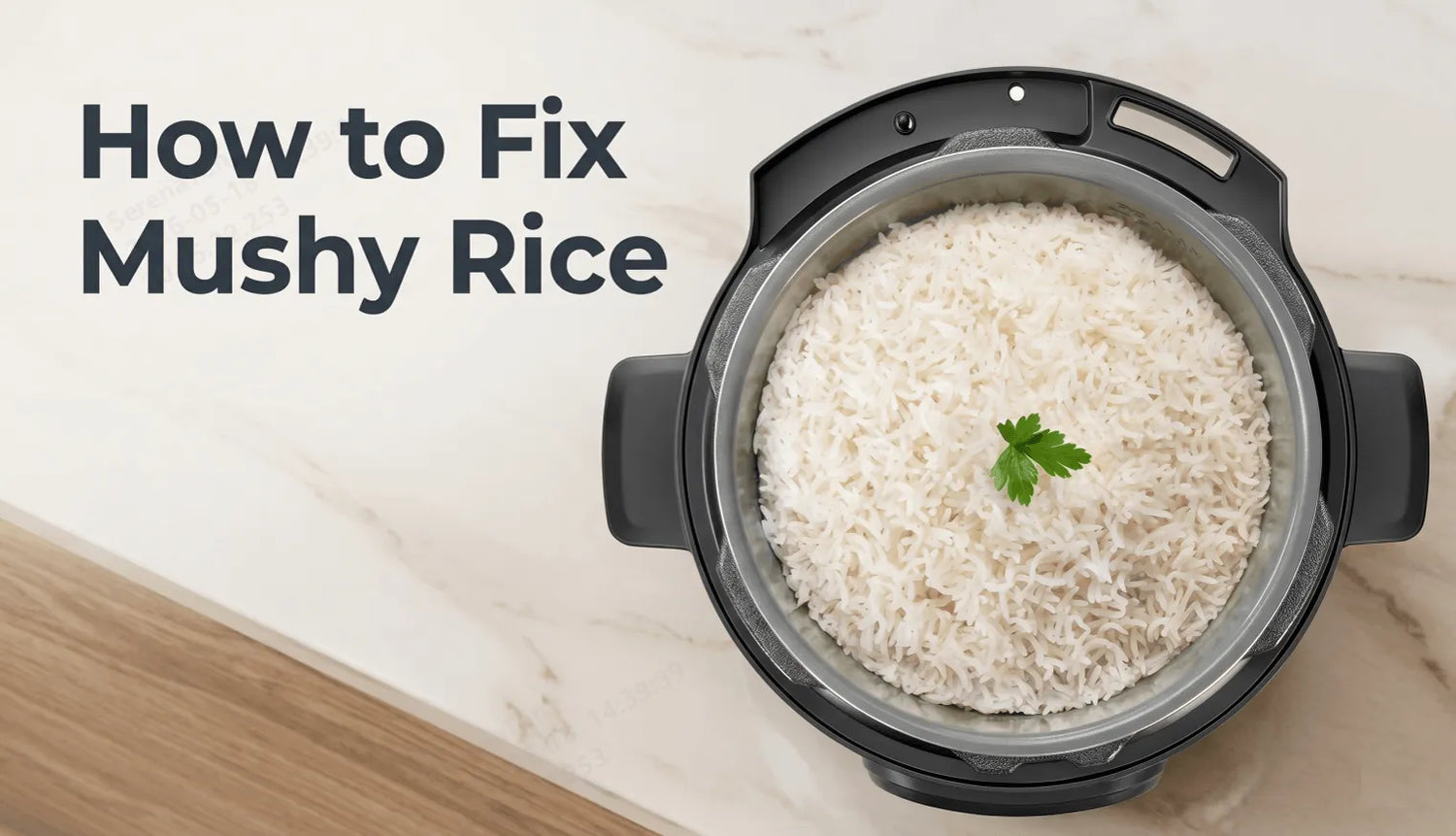
Few kitchen mistakes are more frustrating than lifting the lid and discovering a pot of mushy rice. Instead of light, fluffy grains, you’re left with sticky, clumped rice that feels overcooked and watery. The good news? Mushy rice is often fixable.
Whether you cooked too much water into your rice, left it steaming too long or used the wrong cooking settings, there are several easy ways to rescue it. Even better, the right rice cooker can help prevent the problem entirely.
Table of Contents
What is Mushy Rice (and When Is It Still Fixable?)
Mushy rice happens when rice absorbs too much water or cooks for too long. Instead of staying separate and fluffy, the grains become overly soft, sticky, and clumped together.
In many cases, mushy rice is still salvageable. If the grains mostly hold their shape and there’s only excess moisture, you can usually dry the rice out and improve the texture. However, if the grains have completely broken apart and resemble porridge, recovery becomes much harder.
A simple test: Scoop some rice with a fork. If the grains separate slightly, you can probably fix it. If everything sticks together in one mass, it may be better to repurpose the rice in another dish.
Why Rice Turns Mushy (Root Causes Explained)
Understanding what caused the problem makes it easier to avoid it next time.
Too Much Water
The most common reason rice turns mushy is using too much water. Many home cooks eyeball measurements instead of using accurate ratios, which leads to overhydrated rice.
Different rice varieties require different amounts of water:
- White rice: about 190g rice to 360ml water
- Jasmine rice: slightly less water
- Brown rice: closer to 190g to 480ml
Overcooking & Steam Build-Up
Rice continues cooking even after the heat turns off. This is called carryover cooking. Leaving rice on the hob or in a cooker too long traps steam inside the pot, softening the grains further. This is especially common when rice sits on the 'keep warm' mode for extended periods without being fluffed.
Not Rinsing Rice
Rice naturally contains surface starch. If you skip rinsing, that starch thickens during cooking and creates a sticky, gummy texture. Rinsing rice two to three times before cooking helps remove excess starch and improves grain separation.
Using the Wrong Equipment
Thin pots and inconsistent hob heat can make rice difficult to control. Uneven heating often leads to overcooked bottoms and soggy upper layers. Modern rice cookers help solve this problem by automatically regulating temperature and moisture throughout the cooking cycle.
How to Fix Mushy Rice (5 Proven Methods)
If your rice already turned mushy, don’t throw it away yet. These methods can help restore a better texture.
Method 1: Drain and Steam Dry
This is the fastest and easiest fix for slightly mushy rice.
- Pour the rice into a fine mesh strainer to remove excess water.
- Return the rice to the pot.
- Cook on very low heat for 2–5 minutes uncovered.
- Gently fluff with a fork to release steam.
Pro Tip: You can also place a slice of bread on top of the rice for a minute or two. The bread absorbs additional moisture surprisingly well.
Method 2: Use the Oven
The oven method helps dry rice evenly, especially for large batches.
- Spread the rice onto a baking tray in a thin layer.
- Bake at 180°C (Fan 160°C) for about 5–10 minutes.
- Stir once halfway through.
The dry oven heat helps evaporate moisture without overcooking the rice further. This technique is especially useful before turning rice into fried rice or meal prep dishes.
Method 3: Try the Fridge Hack
Cold air helps remove moisture from rice.
- Spread the rice onto a plate or tray.
- Place it uncovered in the fridge for 15–20 minutes.
- Fluff before serving.
Method 4: Use a Rice Cooker Recovery Method
If you own a modern rice cooker, you may already have the best tool for fixing mushy rice. Start by removing any visible excess water. Then gently fluff the rice to release trapped steam. After that:
- Use the 'Reheat' or 'Steam' setting.
- Leave the lid slightly open.
- Heat for several minutes until moisture evaporates.
Unlike hob cooking, rice cookers provide controlled, even heat that dries rice gradually instead of burning the bottom.
Method 5: Repurpose the Rice
Sometimes the best solution is turning mushy rice into something delicious. Good options include:
- Rice pudding
- Rice cakes
- Stuffed peppers
- Soup thickener
- Fried rice (after chilling overnight)
How to Prevent Mushy Rice (The Foolproof System)
Preventing mushy rice is easier than fixing it. Here is how to get it right every time.
Use a Rice Cooker for Consistent Results
Rice cookers remove much of the guesswork from cooking rice. Instead of manually adjusting hob heat, modern cookers automatically monitor cooking temperature and moisture. For busy households, investing in a high-quality model like the COSORI Rice Cooker simplifies the process with preset cooking functions and hands-off operation, ensuring fluffy grains every time.

Follow the Proper Cooking Workflow
- Rinse the rice: Wash until the water runs mostly clear.
- Measure accurately: Use a proper measuring cup, not guesswork.
- Cook without opening the lid: Let the steam do its job.
- Let the rice rest: Leave it for 5–10 minutes off the heat.
- Fluff before serving: Use a rice paddle to gently separate the grains.
FAQ
Can you fix mushy rice the next day?
Yes. Refrigerating the rice overnight naturally dries it out slightly before reheating.
Is mushy rice safe to eat?
Usually yes, as long as it was stored properly in the fridge and not left out at room temperature for too long.
Can you fry mushy rice?
Yes, but chilling it in the fridge first works best. Cold rice holds together better and crisps up nicely during frying.
Why does my rice cooker make mushy rice?
Possible causes include adding too much water, selecting the incorrect grain setting, or leaving the rice on the 'keep warm' mode for far too long without fluffing it.